
Cost per Wear: la vraie valeur d'un vêtement | MONA WIE
COST PER WEAR: THE MATHS BEHIND A DELIBERATE WARDROBE
There is a number most women never calculate — and it changes everything about the way you dress.
It is not the price on the tag. It is not the discount percentage. It is the figure you arrive at when you divide what you paid by the number of times you actually wore it. This is cost per wear — and once you see it, you cannot unsee it.
A kid mohair blazer at €900, worn twice a week across three seasons for five years, costs less than €11 each time you reach for it. A €200 trend piece, worn four times before it pills, fades, or simply stops feeling right, costs €50 per wear. The blazer was never the expensive choice. It was the economical one.
This is not a theory. It is how women who build wardrobes — rather than accumulate clothing — have always thought. And it is the philosophy at the heart of every piece we design at MONA WIE.
WHAT COST PER WEAR ACTUALLY MEANS
The calculation is disarmingly simple:
Cost per wear (CPW) = purchase price ÷ number of times worn
But its power lies in what it reveals. Cost per wear does not measure how much you spent. It measures how much value you received. It shifts the question from can I afford this? to will I wear this enough to justify it? — which is a far more honest question.
When you apply this lens to your wardrobe, patterns emerge. The pieces with the lowest cost per wear are almost always the same: well-cut, beautifully made, in fabrics that feel as good on the fiftieth wearing as on the first. They are the trousers you reach for without thinking. The coat that makes everything look intentional. The dress that works for Tuesday meetings and Saturday dinners alike.
They are not always the impulse purchases. But they can be.
WHY QUALITY FABRIC IS THE VARIABLE THAT MATTERS MOST
A garment's cost per wear depends on two things: how often you wear it, and how long it lasts. The first is about design — a versatile silhouette you can style across contexts and a timeless cut that does not go out of fashion. The second is about material.
This is where natural fabrics distinguish themselves. Linen becomes softer and more luminous with each wash. Wool holds its shape across seasons. Silk drapes the same way on year one as on year five. These are not fabrics that perform for a season. They are fabrics that improve with time.
At MONA WIE, we work with European mills — Maison Hellard for linen, Standeven for wool, Italian mills for silk and cashmere — because the longevity of a garment begins with the thread. A piece that holds its colour, its structure, and its hand is a piece that earns its place in your wardrobe, wear after wear.
Compare this with synthetic blends. Polyester pills — as do wool and cashmere, though natural fibres respond far better to care. Viscose loses shape after a handful of washes. And beyond durability, there is how they feel: synthetics do not breathe the way natural fibres do, they do not move with your body the same way, and — let us be honest — they do not look the same. There is a depth and richness to linen, wool, and silk that no synthetic has managed to replicate. The price was low, but the cost per wear climbs with every wearing you skip because the garment no longer looks or feels the way it did in the fitting room.
THE MONA WIE COST PER WEAR IN PRACTICE
Let us be specific.
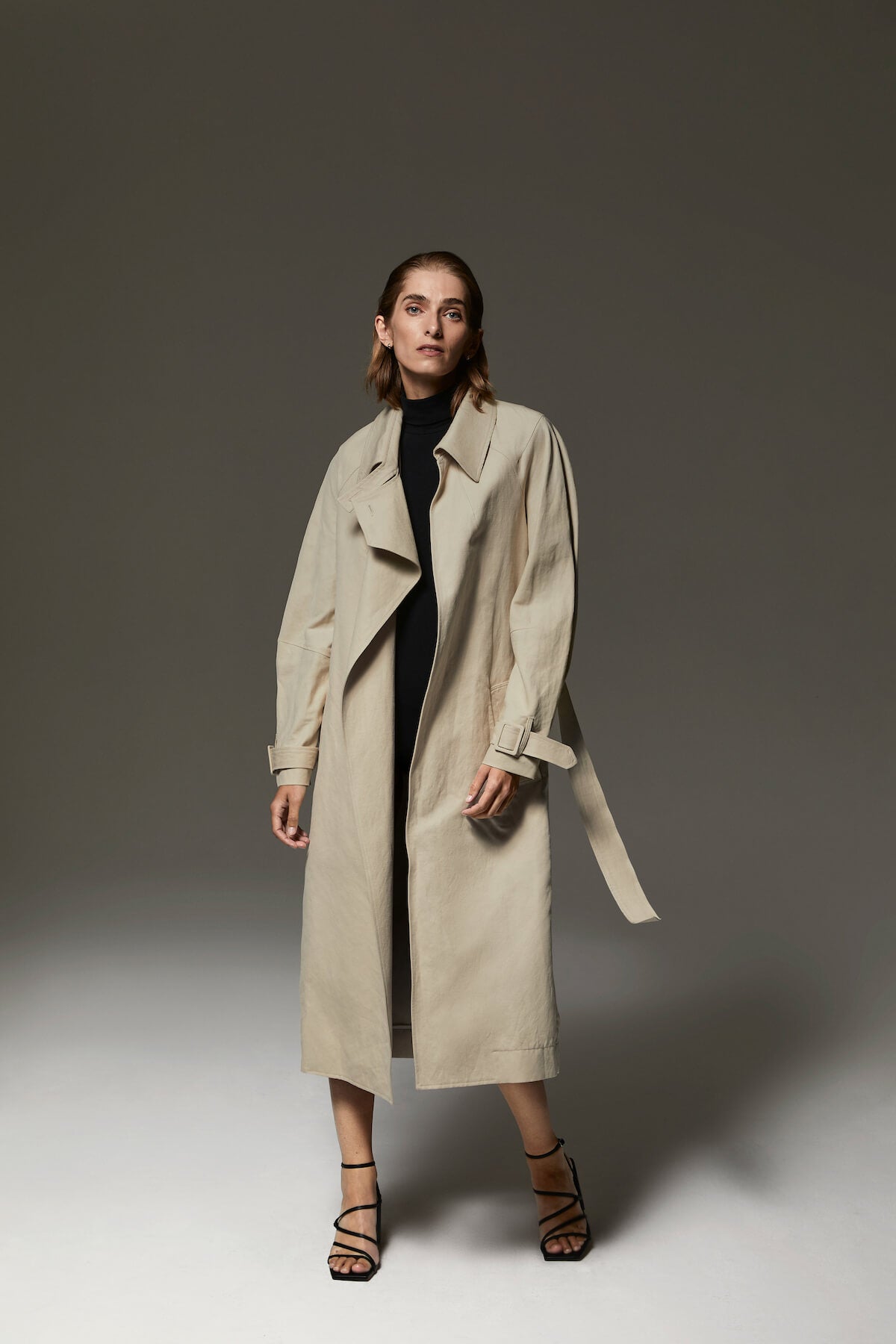
Consider the Charlie trench coat, crafted in an Italian linen-cotton blend. At €800, it is not necessarily an impulse decision — though it has been, more than once. Worn three times a week during autumn and spring, across five years, that is roughly 390 wearings. Your cost per wear: just over €2.
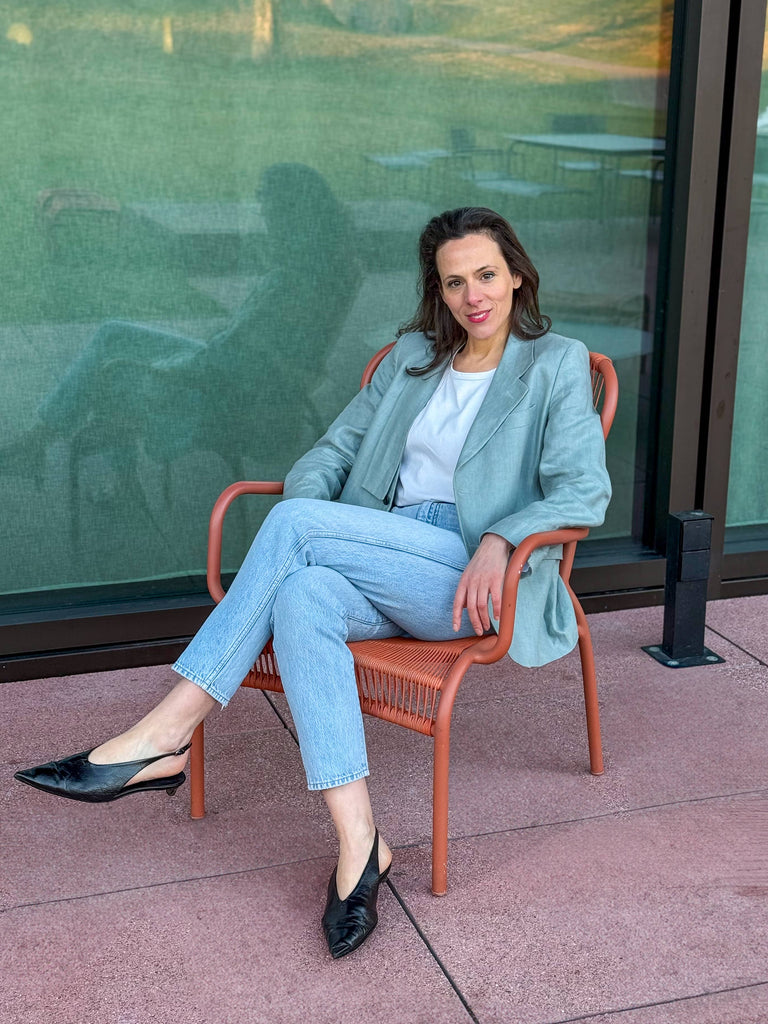
Or the Nynke blazer, at €820. A linen blazer you wear from April through October, layered or alone. Across four years at twice a week: approximately 208 wearings. Cost per wear: under €4.
These are not hypothetical numbers. They are how our clients actually wear these pieces — season after season, year after year. And that is precisely the point. A piece that becomes part of your life does not need to be replaced. It simply continues.
Investment dressing is not about spending more. It is about spending once.
BEYOND THE MATHS: WHAT COST PER WEAR CANNOT MEASURE
There are dimensions of value no formula captures. The confidence of wearing something that fits your body precisely — which is why our made-to-measure service exists. The environmental cost avoided when a garment stays in your wardrobe rather than entering a landfill. The pleasure of opening your wardrobe and recognising every piece as a deliberate choice.
An inspiring wardrobe built on cost-per-wear thinking is not minimal for the sake of minimalism. It is curated for the sake of meaning. Every piece works. Every piece lasts. Every piece reflects who you are — not what was trending when you bought it.
HOW TO START THINKING IN COST PER WEAR
You do not need to overhaul your wardrobe overnight. Begin with one decision.
The next time you consider a purchase, pause. Ask yourself three questions: Will I realistically be wearing this piece at least 20 times in the next year? Does the fabric and construction support that many wearings? Does this piece work with at least three other items I already own?
If the answer to all three is yes, you are looking at a genuine investment — regardless of the price tag. If the answer to any of them is no, the bargain is an illusion.
Cost per wear is not a restriction. It is a liberation. It frees you from the cycle of buying and discarding, from the guilt of clothes unworn, from the nagging sense that your wardrobe is full but nothing feels right. It replaces all of that with something far more elegant: intention.
And intention, as every well-dressed woman knows, is the foundation of true style.
We have written before about the questions worth asking before any purchase — in our guide to conscious acquisition.
This piece, made for you.
Every silhouette in the collection can be cut to your measurements, in the fabric you choose. A 30-minute fit conversation begins it.
Book your appointmentFAQ
What is cost per wear?
Cost per wear is the purchase price of a garment divided by the number of times you wear it. It reveals the real value of clothing over time rather than judging a piece by its price tag alone.
How do you calculate cost per wear for clothing?
Divide the total cost of the garment by the number of times you expect to wear it. For example, a €820 blazer worn 200 times costs around €4 per wear — far less than a €220 blazer worn only ten times before it needs replacing.
Is expensive clothing actually cheaper in the long run?
Not always — but quality clothing often is. Garments made from durable natural fabrics in timeless silhouettes tend to last years longer and get worn far more often, resulting in a lower cost per wear than cheaper alternatives that need frequent replacing.
What fabrics have the best cost per wear?
Natural fabrics like linen, wool, silk, and cashmere tend to age beautifully and maintain their structure over years of wear. Linen in particular becomes softer with each wash, making it exceptionally rewarding over time. We wrote about this in depth in our journal: Why Linen. Why Always.
Alpaca in particular doesn't pill — fibres are longer than cashmere or merino, which dramatically lowers cost per wear. More on the wool, the blends, and care → MONA WIE Alpaca Knitwear.
How does made-to-measure improve cost per wear?
A garment made to your exact measurements fits better, feels more comfortable, and gets worn more frequently. When a piece fits perfectly, you reach for it instinctively — and that is what drives cost per wear down.
Laissez un commentaire
Veuillez noter que les commentaires doivent être approuvés avant d'être affichés